Showing posts with label food. Show all posts

Thursday, September 29, 2011

Eating Green Can be Cheaper than Fast Food

Thought for the green eaters:

It's not so hard to pick the good choices even on the budget of a college student. It takes more prep time and a bit of know-how. It also requires shopping sense! I've never seen Morning Star burgers that cheap. Still, a little planning and the ability to turn raw ingredients into dinner can go a long way. All that's needed in this picture is showing the little incidentals (oil, spices, bread) that can make this into a series of delicious meals.

Thursday, September 15, 2011

Vegetarian Convenience Meals II - Attack of the Tacos

I like easy food, like tacos. Not hard to make, easy to eat, and requires minimal silverwear to be packed. This week I'm sharing two new awesome vegetarian taco fillings that I've stumbled upon. I've tried these both on just plain tortillas, homemade tortillas, and plain tortillas slightly grilled to give them crunch. All are great and have different levels of work, as you need to allot your time.

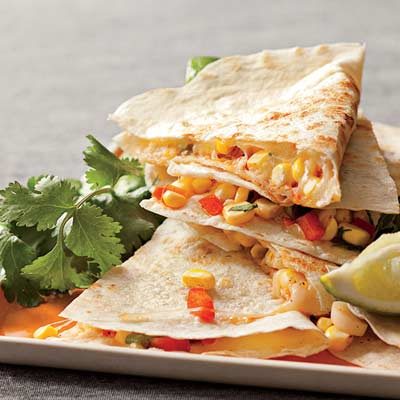
The first is the easiest. I'm not typically a fan of red bell pepper and raw onion, but this was so good I didn't even notice it. The flavor is zippy and delicious.


Image from Rachel Ray Magazine Online

Corn Relish Tacos - Modifed from Everyday with Rachel Ray
1 can whole corn kernels, or two cups fresh corn kernels.
1/2 onion, diced fine.
1/4 red bell pepper, diced fine (more if you actually like the flavor)
1/2tsp oregano
Salt and pepper to taste.
Shredded cheese
Tortillas

Combine all ingredients and let sit overnight. Scoop filling onto tortillas and sprinkle lightly with cheese. So delicious, warmed or cold.

Next up is a delicious experiment of my own. I was given a container of storebought coleslaw after a picnic in exchange for some of my zuchinni bread. I decided to use it to make a riff on my old favorite fish tacos from Rubio's, which feature cabbage prominently.
Bean and Coleslaw Tacos
1 can black beans, rinsed
1 clove garlic, chopped fine, or garlic powder
1/4 onion, chopped.
Spices, to taste. I used oregano, salt, and pepper.
1 container premade coleslaw, or homemade if that's what you have.
Shredded cheese
Tortillas

Cook onion in water until translucent or carmelized, whatever you like better. Add garlic and beans, stirring until heated through. Mash some of the beans with the back of your spoon if you want a creamier texture. Add spices and cook until the mixture bubbles.

Place bean mixture on tortillas and add coleslaw and cheese. You can also toss in salsa if you want more zing. However, by itself you have a creamy, satisfying filling that leaves you stuffed and satisfied after two. I tried to get a picture of these, but I ate them all before I though to get my camera. I'll make them again and try for more.

Happy vegetarian lunches!

Thursday, July 7, 2011

What's In Season: July


Apples
Apricots
Artichokes
Asian Pears
Asparagus
Avocado
Basil
Beets
Black-eyed Peas
Broccoli
Cabbage
Carrots 
Cauliflower
Celery
Cherries
Collards
Corn
Cucumber
Eggplant
Figs
Grapefruit
Grapes
Green Beans
Green Onion
Kale
Kohlrabi
Lemons
Lettuce
Melons
Mushroom
Mustard 
Nectarines
Okra 
Onion
Passion Fruit
Peaches
Pears
Peppers
Plums
Potatoes
Raspberries
Sapote
Spinach
Strawberries
Summer squash
Tomatoes
Turnips
Valencia Oranges

Thursday, June 2, 2011

What's in Season: June

For all my new readers, this series of posts is designed to show you what food is in season, no matter where you shop. It's easy to accidentally buy out of season in grocery stores, so this tells you what's in season for Southern California, courtesy the National Resource Defense Council. If you're out of this area, their website can help you find out what's local within the United States. 


Apricots
Artichokes
Asian Pears
Asparagus
Avocado
Basil
Beets
Black-eyed Peas
Broccoli
Cabbage
Carrots
Cauliflower
Celery
Chard
Collards
Corn
Cucumber
Eggplant
Figs
Grapefruit
Grapes
Green Beans
Green Onion
Kale
Kohlrabi
Kumquats
Lemons
Lettuce
Melons
Mushroom
Mustard
Navel Orange
Nectarines
Okra
Onions
Passion Fruit
Peaches
Pears
Peppers
Plums
Potatoes
Raspberries
Spinach
Strawberries
Summer squash
Tomatoes
Turnips
Valencia Oranges


Take advantage of the summer bounty! If you have favorite recipes, link them in the comments. 

Thursday, May 5, 2011

What's In Season: May

Apricots
Artichokes
Asian Pears
Asparagus
Avocado
Basil
Beets
Black-eyed Peas
Broccoli
Cabbage
Carrots
Cauliflower
Celery
Chard
Cherries

Collards
Corn
Cucumber
Dates (Medjool)
Eggplant
Figs
Grapefruit
Green Beans
Green Onion
Green Peas
Kale
Kohlrabi
Kumquats
Lemons

Lettuce
Mushroom
Mustard

Navel Orange
Nectarines
Okra
Onions
Passion Fruit
Peaches
Plums
Potatoes
Raspberries
Spinach
Strawberries
Summer squash
Tomatoes
Turnips
Valencia Oranges

Thursday, April 28, 2011

Book Review: Urban Farmer

I've recently read a fantastic book about urban farming by Lorraine Johnson. While I hoped for a how-to book about gardening (and thus avoid further Fred-like disasters), I found instead a manifesto and argument for urban farming which is quite persuasive.

Johnson's argument for urban growing focuses on several points:

  1. That land suitable for agriculture in cities is actually more prevalent than imagined.
     Johnson believes that, should lawns, boulevard strips, vacant lots, and even roofs be farmed, many cities could supply their own produce needs. The author is from Canada, so many of her statistics focus on cities there, but one of the studies she cited calculated that, if half of lawns and vacant lots, as well as one tenth of boulevard easements were cultivated, Montreal could provide more than enough to meet the needs of all its citizens using the most conservative estimate of produce needed for the average 4-person family. This still assumes some imports of things such as bananas, coffee, and other exotic imports, but basic needs can be easily met. The author herself maintains a community garden plot, tomatoes on her roof, and a fully-planted backyard; gleans from "ornamental" hawthorn trees, and farms her back patio. In her youth, she planted container gardens on balconies and radishes in cat-litter trays. She has seen beans planted on fire escapes and lettuce in pipes wrapped around balcony rails. Her point: it's doable to garden, no matter what sort of space you have.
  2. That small-scale plots can be effective in agricultural production, at least on the local level. Her statistic was of a demonstration farm that, in a single year on less than an acre of land, produced $65,000 in produce. During World War II, Victory Gardens and backyard cultivation produced 40% of the vegetables in the USA. It is possible to support much of a populace on urban food, though she admits that some places will find it more economical and environmentally efficient to import, based on local weather and resources.
  3. That the production of food can solve many social ills. Children who grow their own food, or participate in the process, are more likely to eat nutrient-rich vegetables and be less picky of eaters. Homegrown food often tastes better because growers need not worry about equal size and ripening time, hardiness, and ability to ship long distances like industrial complexes. Furthermore, many urban communities live in what has been termed as a "food desert" - where access to fresh produce is limited by few grocery stores or lack of transportation to those which exist. Many people are forced to shop at convenience stores, which are not the healthiest places to eat. Because urban farming is often quite cheap, it would also solve the problem of vegetables being too expensive for poverty-stricken families.
  4. That urban farming can have extended benefits beyond simple food production.
    This is a huge part of her book. Johnson argues that cultivation of land, especially vacant land, will help with community-building. It makes "abandoned" land into something valued and for which the community cares, instead of an eyesore. Urban gardeners have also been shown in studies to participate more actively in their community events, take part in beautification projects and trash clean-ups, and give produce away (beyond the bags upon bags of excess zuchinni!). Gardening helps build stronger communities, something which is often lacking in urban society. 
That's only the tip of the iceberg for Johnson's ideas. She also devotes time to guerrilla gardening and urban chicken-keeping. While a bit beyond the average person's abilities and space, they are none the less interesting ideas. The point of her book is that growing food need not be relegated to rural areas and ignored by city-dwellers. Urban residents often have the tools at hand to grow food, even if it's just herbs on a windowsill, and doing so will have definite benefits. 

I highly urge you to read the whole book - it's quite well-written and addresses more problems and concerns than I have space to go into here. If this doesn't inspire you to go plant something, I don't know what will!

Now all I have to do is figure out how not to kill my plants... :)


Tuesday, April 5, 2011

What's In Season: April

April Showers bring lovely food options!


Artichokes
Asparagus
Avocado
Basil
Beets
Broccoli
Cabbage
Carrots
Cauliflower
Celery
Chard
Cherries
Collards
Cucumber
Dates (Medjool)
Grapefruit
Green Beans
Green Onion
Green Peas
Kale
Kohlrabi
Kumquats
Lemons
Lettuce
Mushroom
Mustard
Navel Orange
Nectarines
Passion Fruit
Raspberries
Spinach
Strawberries 
Tangelos
Tangerines
Tomatoes
Turnips

Tuesday, March 29, 2011

Semi-Veg: Meatless Meatballs application

I'm trying to use up the last of my vegetarian meatballs. I've also been reading a lot of cookbooks, not all of which are vegetarian. I came up with this little riff on the meatball sub which was quite good! It's a bit small because I eat it for lunch, but you could easily double it if you're a bigger eater.

Vegetarian Meatball Sub
4" French baguette (or other roll, as you can find. Baguettes are just my favorite).
1 tsp olive oil
1/4c pasta sauce (mine had portabello mushrooms and other spices for extra yum).
1 Eggplant Meatball
1 slice cheese, cut into pieces to fit

The Finished Product (open to show filling)
Start by slicing the baguette in half and removing the inner bread to make a cavity for the fillings. Eat the bread, or use it to make bread crumbs for another project. Put the oil in a pan, and grill the bread cut-side down until golden. Crumble the meatball. Split the sauce between the two cavities in the bread, and put the meatball in one half, and the cheese in the other. Either broil or microwave the sandwich until heated through and the cheese is melted.

Pssst: It's also around 400 calories, if you care to count.

Saturday, March 26, 2011

Veggie Tempura Adventure

I don't know if you've tried it, but tempura is one of the yummy, sort-of-not-so-healthy vegetarian treats which I enjoy. I just finished up my finals (thank you all for tolerating the break), so I'm going to start posting twice a week again, with cleaning articles on Tuesday for the rest of the month. There will be a postponed cleaning article on laundry in the next few days. Thank you all for your patience.

But back to tempura and finals. I crave bad-for-you treats when I get under stress, so tempura is a nice way to indulge my need for fried foods without going too far down the non-veg path. This particular recipe hails from the Japanese Country Cookbook by Russ Rudzinski. It's also really easy and delicious. A decent amount, with sauce and salad, makes a good meal.


 You Will Need:
      Batter:
          1c flour
          1c water
          1 egg
          1tsp sugar
          1/2 tsp baking powder

Assorted veggies


Sauce if you're feeling fancy:
          1c vegetable stock
          1/2c sugar
          1/2c soy sauce
          2Tbsp mirin or sherry (or not, as you wish)

Start by making the batter about 15 minutes before you plan to cook. Beat all the ingredients (with chopsticks, if you want to be authentic). It should still be a bit lumpy. After it sets, it should cling to a dipped beater and fall off in large drops. If it's too thick, add a little water. Mix the sauce.


Slice your vegetables about 1/4 inch thick. For my tempura, I sliced a winter squash and half a sweet potato. You could also try green peppers, zucchini, mushrooms, string beans, eggplant, or even onions.


Pour about an inch to two inches of oil in the sauce pan. Heat it to 375 degrees, or to when a drop of batter settles to the bottom, then immediately rises. Dip your vegetables in the batter, let the excess drain off, and put them into the oil. Don't overcrowd! Start with 4 and work your way up. Turn them in about two minutes, or when golden brown. It helps to use two pairs of chopsticks for this - one to dip in batter, one to flip the tempura.

Serve them with the sauce, at room temperature.

Tuesday, March 1, 2011

What's In Season: March

Artichokes
Asparagus
Avocado
Beets
Blood Orange
Broccoli
Cabbage
Carrots
Cauliflower
Celery
Chard
Collards
Dates (Medjool)
Grapefruit
Green Onion
Green Peas
Kale
Kohlrabi
Kumquats
Lemons
Lettuce
Mushroom
Mustard
Navel Orange
Passion Fruit
Spinach
Strawberries
Tangelos
Tangerines
Turnips

Tuesday, February 8, 2011

Mac and Cheese Not From A Box

As I work to stash away more vegetarian options for school days, I made mac and cheese. The real stuff, not the stuff that gives one the "Blue Box Blues". I've made it from scratch before, but this recipe gleefully tried from the Vegetarian Times is by far the best I've tried. Here's the paraphrased recipe, with my commentary in the directions.

Image copyright Vegetarian Times
Mac and Cheese for Grownups
2 c. whole-wheat pasta
1 lb spinach leaves (I substituted 12oz broccoli, slightly steamed)
1/4 c olive oil
1/4 c flour
2 c milk (fat free is okay)
1/2 c cheese (I used cheddar, the recipe calls for grated Parmesan)
1 clove garlic (more or less to taste)
1/4 tsp nutmeg (It says optional, but do it; it's delicious)

Preheat your oven to 350 degrees and spray a 11x9 pan.
Cook the pasta according to the package or your normal style.
Cook the spinach in a pot 2 to 3 minutes until it wilts, stirring to heat all leaves. Drain and press out liquid, then coarsely chop. (Steam broccoli for a few minutes until soft but not totally cooked.)

Heat the oil in a (large-ish) sauce pan over medium heat. Whisk in flour and cook for two minutes, stirring constantly. Gradually whisk in milk, and cook 5 minutes until the sauce has thickened. (Congratulations, you've made a roux. It's a delicious recipe and great for normal white sauces, Alfredo, and is the basis for a lot of other recipes.) Take it off the heat, stir in the pasta, spinach (or broccoli), cheese, garlic, and nutmeg. Add salt and pepper if desired.

Sprinkle the top with 2 Tbsp of cheese, and bake 45-55 minutes or until browned and bubbly.
-------------------------------------------------
YUM Yum YUM. I found that the leftovers froze well, and then reheated in the microwave for a quick homemade lunch. Paired with a salad, it was hearty enough to get me through the day. I didn't get a picture of my version because I ate it all, first, so the picture above is from Vegetarian Times. 

Tuesday, February 1, 2011

What's In Season: February

Artichokes
Asparagus
Avocado
Beets
Blood Orange
Broccoli
Brussels Sprouts
Cabbage
Carrots
Cauliflower
Celery
Chard
Collards
Dates (Medjool)
Grapefruit
Green Onion
Green Peas
Kale
Kohlrabi
Kumquats
Lemons
Lettuce
Mushroom
Mustard
Navel Orange
Passion Fruit
Spinach
Strawberries
Tangelos
Tangerines
Turnips

Tuesday, January 25, 2011

Asking For Greener Options

The other day, I was at a sandwich shop getting a veggie sandwich. The person in front of me was obviously a hardcore vegan. The thing that clued me in (and made me think) was that she requested every person who made her sandwich to change into new gloves. The eye opener for me is that every one did, without complaint. This was an epiphany for me - I've never even thought to ask for such things. 

Thinking about reducing the amount of trash I use on a daily basis, I decided to try an experiment. There's a lot of trash we take for granted in things we consume - like fast food sandwiches. When they make your lunch at said sandwich chain, they always add about five napkins and throw the wrapped sandwich in a plastic bag. As I'm going to walk about ten feet, then unwrap the sandwich and eat it, a plastic bag has always seemed like overkill. Even if I was going to take it somewhere, I have my trusty furoshiki to carry it. I have a reusable napkin. So, I wondered, is is possible to avoid all the packaging that comes with such fast food stops?

Tuesday, January 18, 2011

A Review of "Compassion Over Killing"'s Black Bean Burgers

Veggie burgers are bloody expensive, have you noticed that? I shop in bulk whenever possible, and Bocca burgers and their ilk are nearly twice the cost of meat burgers. That's a wonder, since vegetarian options are normally cheaper than their carnivorous cousins. Also, they're highly processed, and since I read Pollan I'm a bit against processed food when I can get away with something that need not have preservatives or industrial ingredients. Furthermore, the more processed a food is, the more packaging it usually has. In general, premade food is the worst for a semi-vegetarian environmentalist.

My New Year's resolution is to make more food than I'm buying premade this year, no matter how busy and stressed I get, so I'm trying recipes right and left. Compassion Over Killing is a rather hard-line vegan site, but their recipes are usually pretty tasty since they're aimed at the new vegetarian/vegan. I got my favorite tofu taco recipe from them, so I'm willing to look twice at a recipe for black bean burgers. Here's their recipe, with my annotations in parentheses.

Compassion Over Killing's Easy Vegetarian Recipes: Dinner: Black Bean Burgers
Serves 2
      (More like 3-4, with the size of burgers I made. Half the recipe was unwieldy and made a HUGE patty. 1/3 was much more manageable.)

  • 1 15-ounce can black beans, drained  (Drain them *well*. My mix was too moist and started to fall apart because I missed some liquid.)
  • 1/4 cup diced and sauted onions (I caramelized mine; I love caramelized onions.)
  • 2 slices multigrain bread, finely crumbled
  • 1/2 teaspoon each of garlic powder, black pepper, and onion powder (The recipe claims optional. Use these and the salt, they make the house smell delicious and I think the burgers would be bland without it)
  • 1/4 teaspoon salt
  • 1/2 cup cracker crumbs (In my version, I used a very very stale piece of bread, turned into crumbs. Waste not food that can be used for something else).

In a large bowl, mash the drained black beans. Add the sauted onions, crumbled bread, and spices. Mix thoroughly. Add about 1/4 cup of cracker crumbs (or just enough to be able to form patties from the mixture). Using your hands, form the mixture into 1/2-inch thick patties. For a breaded burger, gently coat each patty with more cracker crumbs.

In a lightly oiled non-stick pan, fry both sides of the patties. Serve with a garnish of lettuce, tomatoes, avocado, and any other condiments on buns or over a bed or rice.

Jane's Review: Really, really delicious and fairly easy to make, if a smidge labor intensive when it comes to crumbling all that bread! I hadn't had black beans outside of a Rubio's side dish, and I really like them in this recipe. My mix was too wet, so the burgers tended to fall apart. I made the second round thinner and that helped a bit with cooking stability.

I talked to my foodie mother, and she told me I should probably let the mix sit for five to ten minutes to let the bread and crackers absorb enough liquid to make it more stable. This is apparently what you do in a meatloaf. The other solution is to add an egg as a binder, which Compassion wouldn't do because they're mostly vegan cooks. Personally, I have no ethical problems with secondary products, so eggs are on my menu.


I served them up as a lazy Sunday dinner with a dollop of salsa, sour cream, and a sprinkling of cheese. The beans give it a nice flavor, especially grilled, and I think they'd crumble well as a ground beef substitute in sauces and fillings.

Tuesday, January 11, 2011

What is "Red List" Seafood?

Facebook has caught on to my environmentalist leanings. I've been getting ads about Costco serving "Red List" seafood and some groups are boycotting it because of this.

My first thought: What the heck is "Red List" seafood? A little Googling and some links from my time in Conservation Biology found me the answer.

The Monterey Bay Aquarium has done research to scientifically rank seafood products based on how friendly they are to our oceanic environments. Like a traffic light, they are ranked green, yellow, and red.

Green seafood, or the "Best Choice" seafood, are abundant, well-managed, and farmed or caught in ways that are good for the environment or that do not harm it.

Yellow seafood, or "Good Alternatives", have some concerns about how they're procured, either through fishing or farming, or have habitats which are slightly threatened due to human activities. They're an option, but it's recommended that consumers avoid them.

Red seafood, or "Avoid" list, are currently overfished or farmed/caught in ways that harm the environment and other marine life.


They offer a list, which can be found on the above site, for each region of the US, which they suggest you print and keep with you when you go out for seafood. Download a Regional Seafood Watch Card | Monterey Bay Aquarium. There's also one for sushi if you love that as much as I do.

Keep this in mind when shopping. Ghost fishing and unsustainable fishing can be as wasteful as industry, and farmed salmon takes three times the food to raise as wild. Ghost fishing (accidental catching and killing done by lost nets, line, and hooks) kills nearly 1/3 as much as legal fishing. Animals often caught include dolphins and sea-turtles. We can make small differences by choosing wisely at the counter. 

Tuesday, January 4, 2011

What's In Season: January

As a new feature for the new year, I'm going to be posting what foods are currently in season from the National Resource Defense Council. It will be a semimonthly or so feature mainly aimed at Southern California, so if you're not in SoCal, check out the other  U.S. States here.


The goal of this is to help you eat in season if you're not at a farmer's market. But I'll also try to post something, be it an alternative beauty recipe, food recipe, or cool fact that I can find to help you in your new green lifestyle


January's Eats

Artichokes
Asparagus
Avocado
Beets
Blood Orange
Broccoli
Cabbage
Carambola

Cauliflower
Celery
Chard
Cherimoyas
Dates (Medjool)

Grapefruit, Green Onion


Green Peas
Kale
Kohlrabi
Kumquats
Lemons
Mushroom
Mustard
Navel Orange
Passion Fruit
Strawberries
Tangelos
Tangerines


Tuesday, December 28, 2010

Semi-Veg: Meatless Meatballs

School starts next week. I'm actually really excited about this! I've got great classes, a schedule that makes taking the bus not involve getting up at 5am, and all my favorite people are back in town.

One problem I found last quarter was that when I got really busy with midterms, papers, and finals, I tended to eat too much junk food, and a lot of it tended to be meat. I just didn't have time to fix a lot of good vegetarian food, and the premades I found were primarily spinach and feta cheese based - eat ravioli and spanakopita  for two weeks and see how much spinach and feta you ever want to see again.

To counteract this, I'm laying in a stock of vegetarian "fast food" during break. These are things I can make now, freeze, and then snag on the run. I did it last quarter when I turned some eggs that were getting old into a massive waffle stash. I had delicious for weeks.

As an experiment, I tried making  Vegetarian Eggplant Meatballs. This recipe was really easy to make. It took about an hour for my first time through and was simple to prepare. A few comments:
  1. Don't add more oil if the onion/eggplant mixture starts to stick to the pan. Just use water to decrease fat.
  2. I used a teaspoon of thyme instead of fresh basil and cheddar cheese instead of the vegan cheese and it tasted fine. I didn't add the walnuts.
  3. Dice the onion VERY well, and make the eggplant closer to 1/4 inch than 1/2.
  4. If you don't have cooking spray, just brush with oil instead and they'll brown well.
  5. There's no count on the recipe, but I made mine golf-ball size and it made about 25. 
I figure these can become meatball subs, be added to pasta, or even broken up and used like ground beef. They'd be fine with a dipping sauce as an appetizer, too. They got rave reviews from my non-vegetarian testers except for the one who didn't like eggplant. They're flavorful and smell fantastic while baking! Since eggplant are in season right now (10 for $10!!) I'm going to lay in a stash for the next quarter. 

Thursday, December 23, 2010

Rainy Weather and Hot Cocoa

Oh, the weather outside is frightful! It's been raining for nearly a week now, and before that, there was a cold snap of down to 45 degrees F, which is EXTREMELY cold for this area. I normally try to stay away from caffeine (ignoring the occasional Dr Pepper indulgence), so when it gets cold, I turn to cocoa.

Cocoa is one of those black box foods, like baking powder, that we use without knowing how it's made. There are cocoa recipes out there, but they involve heating milk and mixing in cocoa and it's messy to do on the run. Mixes are infinitely superior. But as you know, I'm a big fan of making whenever possible because it's often greener than a mass-produced version, it uses less packaging, and you know exactly what goes into it.

Plus, while I've bought a few gifts, I wanted to make something for my friends. So I decided to make cocoa mix and package it in tins as a gift. I turned to my trusty Make-A-Mix cookbook, which has always served me well.

Cocoa Mix Recipe
1 cup powdered milk
1 cup nondairy creamer
3/4 cup cocoa powder.
1 1/2 cup sugar

Mix all. To serve, mix 4 heaping teaspoon fulls in a glass with 8oz boiling water. I added a large handful of mini-marshmallows to my tins of mix, too, because cocoa is never right without mini marshmallows. Pop it in a tin, and it makes a great gift any time of the winter.

Super tip-top holiday secret - a splash of eggnog in your newly-handmade cocoa may just be the best treat ever invented.

Tuesday, December 21, 2010

"Blue Christmas" Stuffing

One of the best parts of Christmas and Thanksgiving for me is stuffing. Since it's what I love, I make it for all our family gatherings. However, all of recipes tend to call for chicken stock, and apparently many people make sausage stuffing (I never have, but that's that).

Making stuffing for a semi-vegetarian to eat is easy enough. I usually take a box mix and spruce it up because of time constraints, but here's the "Blue Christmas" style I came up with. It's heavy on the fruit, especially blueberries, which gave it its name. It got rave reviews from family and friends. Unfortunately, I rarely measure, so all measures are approximate. Feel free to experiment and make it your own.

Start with a standard box mix of your favorite variety. You're basically going to follow the box mix, but with a few tweaks.

Start by chopping half an apple and a quarter of an onion per bag of stuffing mix. Saute them in olive oil until the onion is browned slightly and the apple is soft.

Now, instead of chicken broth, measure the same amount of blueberry juice cocktail. Yes, you can use juice in stuffing mix and it works just as well as chicken stock. Throw in some blueberries, fresh or frozen, about half a teaspoon each of garlic powder and cinnamon, a dash of pepper, and a quarter teaspoon of nutmeg and allspice. Bring this "witches brew" all to a boil, and follow the rest of the package directions.

That's my blueberry option, but I'm sure lots of other fruit juices would work, too. Apple or cranberry juice comes to mind off the top of my head, though I'd adjust the spices if I used those. Let me know if you try it, and what works!

Monday, December 20, 2010

Vegan Cake!

Thank you for hanging on while I managed to pass my classes this quarter. Now, back to your regularly scheduled postings. In fact, as a holiday gift, I'll be posting four times this week (most having to do with food) to make up for the weeks I missed.

One of my absolute favorite things about the holidays is food. I love food, I love making food, and I love exchanging food with friends. Since I'm in college and have a minimal budget, I'm planning to make a lot of my gifts this year. I'm making honey cleanser for some, but in general one can never go wrong with homemade goodies, as a hostess gift or as a gift in itself.

I made this cake this week, and in making it realized something - it's vegan. Not just vegetarian, vegan. I've been making it for years and it's one of the first things I learned how to make. It's great as cupcakes, and it's basically foolproof. It comes out moist and not too dense, but not too fluffy.

Vegan Chocolate "Wacky" Cake:
Column A                  Column B
 1.5 c flour                   1 c water
 1 c sugar                    1/4 c olive oil
 1/4 c cocoa                1 Tbsp white vinegar
 1 tsp baking soda       1/2 tsp vanilla
 1/2 tsp salt

Green Baking Directions:
Don't preheat your oven. Grease a 8-inch cake pan. 
Start by mixing all the ingredients in column A. Once they're roughly mixed, make a well in the center. Pour all of the ingredients from column B into the center. Mix the ingredients thoroughly. Pour into the cake pan.
Turn on your oven to 350 degrees F. Bake 30 minutes, then turn off the oven and let it bake in the residual heat for another 5 minutes or until a toothpick inserted in the middle comes out clean.
You may need to readjust this "turn off time", which saves either electricity or gas, depending on your ambient temperature.


Standard Baking Directions:
Preheat oven to 350 degrees F. Grease a 8-inch cake pan. 
Follow above instructions, but bake as normal for 30-35 minutes or until toothpick inserted in the middle comes out clean. 

Try not to eat them all at once, okay?