Showing posts with label consumerism. Show all posts

Thursday, October 13, 2011

Product Review: Ecotools Makeup Brushes

I decided to do a girly splurge and buy some makeup tools. I'd been working without them, but a couple of the cheaper brushes which came with my makeup just were not cutting the application. I did a little poking around and decided to check out Ecotools.

Ecotools makes brushes and other body equipment (body brushes, scrubblets, bath and body tools). I bought a retractable kabuki brush and a set of eye makeup brushes with case. What I liked was that the handles of the brushes are bamboo, not plastic, the metal parts which hold the bristles are recycled aluminum, and the bristles, while synthetic polyester (plastic!), are extremely soft for being vegan. The case for the makeup brushes was made of cotton and hemp.

The price was a bit higher than some brushes, but not by much. The kabuki was $5, and the eye brushes were $6 for five brushes and case. I bought them at a supermarket, so no shipping costs. This is actually on the lower end of cost for makeup brushes, even considering the "green" packaging and image.

I think the neatest part for me was the packaging. They don't put it in paper-backed plastic like a lot of brushes, which often can't be recycled. Instead, they put it in a recycled plastic pouch. While I'm a bit leery of plastic packaging, they make the pouch extremely sturdy and encourage you to reuse it for whatever you need. The smaller one from my brush is being used as a travel pouch for my toothbrush. I think the larger one will be a cosmetics kit for travel, too. If you don't want to reuse them, the plastic itself can be recycled.

As far as the brushes themselves, I'm not the best comparative person to ask. I've never owned makeup tools before. I can say, however, that they are soft, get the job done with no holes in the application, and are easy to use.

Finally, Ecotools donates 1% of their overall profit to EarthShare and the Wildlife Alliance, two charities that work to promote sustainability and protect forests and wildlife.

The verdict? If you need a new makeup tool, I'd recommend these. They're about as sustainable as available, fairly plastic-free, and their business practices seem rather legitimate. 

Thursday, July 21, 2011

Reduce, Reuse!

Last week was recycle, and by sheer chance this week is reduce and reuse.

I have a lovely pair of boots, super warm and waterproof. I'll be needing them a lot this winter as I face SNOW for the first winter ever. The zippers have always been choosy, and when I was sewing the teeth of the zipper down, I managed to snap the zipper pull in half along the body. BAM! Expensive pair of boots now non-functional.

I'm moving to a town where biking is more feasible than driving a car. I definitely need a bike, but how to get one on a student's budget?

This, my darling readers, is where the other two, oft-neglected R's come into play. We're all good about recycling, but many of us (including me) forget to reduce our waste and reuse what we can.

I took my boots to a cobbler. It sounds old-fashioned, but for $12 I was able to get the boot back into perfect working order. $12 sounds like a lot for a zipper pull, but compared to $80 for new boots it's a steal. Reduced my need for new items? Check.

In hunting through the remnants of my grandmother's garage contents, I found a lovely bike. Problem: the bike is probably twice my age, has a chain that's rusted solid, and the back brakes aren't terribly responsive. A reuse is in the works. I don't know much about bikes, so I took it to pros and had them tune it. Not only were they absolutely entranced by a bike with little levers for shifters, they brought it up to working order. Also steep price for a student like me: $110 after labor. It's still cheaper than a few hundred for a new bike, though. Now that I have a clue what's going on and know the bike isn't going to fall apart, I can do my own maintenance. I wanted to have it professionally checked the first time, though, to make sure there wasn't any major issue that could be dangerous. What I did find out - it's a steel frame bike and apparently pretty darn tough, better than what I could buy in a store. That's a definite plus!

There you have it: for around a fifth of the price of replacing, I reduced waste and reused what I found. If you haven't ever tried a classic repair place, give it a shot. It'll be cheaper than buying new, and the planet will definitely thank you for the effort.

Oh, and you won't mind a proud newbie gardnerer bragging a bit, right?

Thursday, July 14, 2011

A Recycling Adventure

Thank you to those who participated in the furoshiki giveaway. Congratulations, Rosie! You won the camo furoshiki with your tip of "use coffee grounds for fertilizer". Did you also know coffee grounds discourage snails?

Image copyright CD-lab.com
On another note, this morning, my friend handed me a sales DVD she'd been given with the comment of, "Can you get rid of this?" I'd never thought of recycling DVDs or CDs, so I decided to do some Googling and find out.

Most of the programs on the web will be glad to recycle your DVDs, but only if you're willing to mail them in, often in bulk. This is a bit frustrating, since I don't want to pay postage on something of which I'm trying to be rid. This just wasn't an option for me, which is the same problem I have with Preserve's Gimmie 5 Program. All their drop-off points are too far from me, so I'd have to mail my plastics away.

I checked out Earth911 next. If you haven't found this lovely recycling resource, you should definitely check it out. They have a search engine for what you want to recycle and where you are. Just type in what you want to recycle, and it will tell you where you can recycle it, or even if it can go in your curbside recycling.

However, Earth911 failed me on DVD recycling. It only had thrift stores listed, and not only was this a fairly useless marketing DVD, it was an *old* fairly useless marketing DVD. I didn't want to inflict that on Goodwill.

Finally, I found my answer at an unexpected source: Best Buy. Apparently Best Buy has a free, fairly comprehensive electronics recycling program. They'll take anything they list on their website, no matter how old and where you bought it. It's generally free, too! For me, there's one just down the street and on the way to my bus stop, so I'll drop it by on my way home.

Huzzah for recycling!


Thursday, June 23, 2011

A Newbie Goes Thrift Shopping

(Somehow, this keeps posting early. I'm giving in and letting it be instead of fighting to delete and repost it. Enjoy!)

While I've been a thrift shop lover for many years now, I found out a friend of mine had never even been inside one. I was in need of a thrift-shopping afternoon to find some long-sleeve shirts anyway and my friend, an urban Jane, needed some jeans and sweaters, so we scheduled a trip.

Urban Jane had her doubts about thrift stores. As she put it, "I thought there would be a lot more clothing with 'questionable stains'." She was expecting what most people believe about thrift stores: that they're crowded, low quality, and not really useful as far as clothing goes.

There is a thrift store near my home which boasts a gigantic clothing selection. Quite literally, this place is the size of a grocery store. We spent a total of $50 between us, and this was the result:

Three pairs of pants, five shirts, one leather jacket, and two cardigans.
Urban Jane's reaction was what made the trip worth it!

Her words: "I didn't realize that I could find [name brand] jeans there. I know people who would love to pay $5-10 for their jeans. I buy cheap jeans for $20, and I know people who easily spend $80 on a single pair. "

On quality: "The jeans aren't exactly new, but I like that. They're already broken in, so I know that if they fit, they will continue fitting."

The best compliment: "I wish I'd known about this all through college. It's great!"

So, the tips of the day:
1) Select clothes by starting by type you want, narrowing by color, then style, then fit, then price. If it survives all these levels, it's something you definitely want to consider.
2)If you don't have a skirt to let you try on jeans (just shrug them on under a very loose skirt), snag one from the racks and use it. This is particularly important if your thrift store has no changing room to prevent theft.
3)Value of a piece is based on how much you like it and how much you'll use it. Only you can decide it. However, bringing a friend to tell you how it fits is definitely a nice thing.
4)A camera lets you see how you look if there's no mirror.
5)Splurge a little if you see something you absolutely love. It probably won't be there when you return.

Where do you all thrift shop? If you haven't gone, why?  

Wednesday, April 20, 2011

Happy Earth Week!

I ran out of posts without realizing it! I promise, I'll make it up this week. Which is actually perfect timing, because it's a Blog Holiday this week: Earth Day!
Why not celebrate with a few of the freebies being offered by various companies? It's a great way to try out things you might not experience, and see if you like them enough to use them on a regular basis. 

Image copyright NOAA
  • National Parks: Visit your favorite national park for free through Sunday, April 25th!
  • Disney Store: Get a FREE hat when you bring in 6 plastic bottles or soda cans! [Valid 4.22 only]
    • There's also rumors of a free tote bag on Friday when you exchange 5-6 plastic bags. 
  • Babies R Us: Free tote bag when you bring this coupon. Also 25% off discount on all the clothing and shoes that you can fit inside the bag!
  • Origins: Trade in a current skin-care product bottle from any brand to get a free full-size cleanser! Print out this form and bring it with your current cleanser (empty or full). Pssst! They also recycle makeup containers all year long!
  • Hanes: Free t-shirt and a tree planted when you buy any 3 Hanes products! [Valid through 5.15]
  • Apple: Free download of Planet Earth for iTunes!
  • Travelocity: 40% off prices at 40 green hotels all over!
  • Travelzoo: Find discounts on U.S. LEED-certified hotels!
  • Walgreens: Refill your printer cartridge for only $1 ($12 value)! Also, 22% off on green products through 4.30!
  • Amazon: Up to 34% off some Earth Day reading!
  • Drugstore.com: 40% off all products featured in the "green and natural" store. [Valid through 4.23]
  • Numi Organic Teas: 20% off with coupon code Eday40
                      (Thanks, http://dealspl.us!)

                   (Thanks, http://bargainbriana.com!)


Of which will you take advantage? 

Tuesday, January 25, 2011

Asking For Greener Options

The other day, I was at a sandwich shop getting a veggie sandwich. The person in front of me was obviously a hardcore vegan. The thing that clued me in (and made me think) was that she requested every person who made her sandwich to change into new gloves. The eye opener for me is that every one did, without complaint. This was an epiphany for me - I've never even thought to ask for such things. 

Thinking about reducing the amount of trash I use on a daily basis, I decided to try an experiment. There's a lot of trash we take for granted in things we consume - like fast food sandwiches. When they make your lunch at said sandwich chain, they always add about five napkins and throw the wrapped sandwich in a plastic bag. As I'm going to walk about ten feet, then unwrap the sandwich and eat it, a plastic bag has always seemed like overkill. Even if I was going to take it somewhere, I have my trusty furoshiki to carry it. I have a reusable napkin. So, I wondered, is is possible to avoid all the packaging that comes with such fast food stops?

Thursday, August 26, 2010

Farmers' Markets II, in which Jane's efforts bear fruit (and vegetables)

I finally found a farmers' market! It was the closest one to me, and while it's on Saturday morning and not uberconvenient for me, it actually contains produce. Lots and lots of produce.

Here's the haul:

What you see (clockwise): Cabbage, carrots, a tomato plant who shall be henceforth known as Fred, really awesome key lime cake, strawberries, limes, a sapote fruit, and a cantaloupe. 

This amount, along with the lettuce, apples, watermelon, and tomatoes, supplemented by oranges from the tree, is about a week's vegetation for my small household. The cabbage, carrots, and apples became a massive amount of coleslaw, as instant vegetable for dinner or lunch; the strawberries were tart and make great snacks; and the cake didn't last the evening. (Shameless plug for people in my area: LeRoy's Sweet Potato Shack makes the absolute most fantastic cake ever. We sampled the red velvet and took the key lime home. It was phenomenal.)

Fred will be featuring in his own adventure soon - he's going to be my Global Bucket plant. Stay tuned!

Tuesday, August 10, 2010

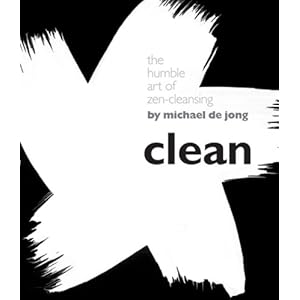
Clean: The Humble Art of Zen-Cleansing

Book review time! I know very few of you read my quick articles on cleaning with fewer chemicals, but it's really worth it to realize how many chemicals we pour into our environment just in cleaning up our house, dorm, or apartment. There are dozens of books out on the market which claim to tell you how to clean using fewer chemicals, and I've read several of them. Thus far, Michael de Jong's Clean has stood out as a fairly no-nonsense guide.

A lot of the books out on cleaning greener are panicky. I read one that, in less than fifty pages, made me want to desperately take the author out for yoga and a chill pill. They panic at the amount of chemicals in our home environments, how disease is on the rise, and turn cartwheels about how we're killing ourselves while not really giving much good advice except "buy a greener cleaning solution". De Jong's book is much more calm and, not surprisingly, zen. His book is divided into five sections: salt, baking soda, vinegar, borax, and lemon. Each, alone or combined with another, is a cleaning ingredient. He lists tips under each section, and includes a reference in the front for easy browsing. I've read a lot of similar tips in other books, but he had some I've never heard of, and many which I know work. The book is also fairly small and inexpensive, if you can't find it at your local library for a quick peruse.

You can also find him online with tips here.

Green clean - it's cheaper, better for your home and macro-environment, safer for your skin, and more kind for the planet. Give it a shot!

Thursday, July 29, 2010

Water Bottle Waste

One superb eco-friendly change I've seen go viral lately is the shift away from bottled water. More and more, I see people carrying either metal Kleen Canteens or plastic water bottles. This is fantastic! Bottled water is truly horrible for the environment. Check out the facts:

1) Bottled water is not as stringently regulated. Your tap water is tested for E. coli and other pathogens and must show quality reports. 22% of bottled water has more contaminants than your tap!

2) It takes three times more water to make bottled water than what's in the bottle to manufacture the bottle itself. Since I live in an area with water shortages, this worries me. Since water is most likely to be the limited resource of the next hundred years, it should worry you, too. The more you drink bottled, the less there is to go around. 

3) The oil which makes up the bottles for the water could power 1 million cars for a year. Only 1 in 5 is recycled. The rest? On the side of your freeway, in your trash, plugging up your landfill, and in the ocean and waterways. 

4) The other side of "going green": Bottled water costs $10 a gallon on average. Tap water costs less than a tenth of a penny a gallon. Why spend so much green on a less green alternative? 

Thursday, July 22, 2010

The Dangers of Going Too Green

I was reading a book today on greening your lifestyle and especially on eliminating toxic chemicals from your life. One part involved paint. Some of the author's advice was sound: watch out for formaldehyde and paints which "out gas" toxic chemicals over time. However, one of her alternatives was earth-based pigments, especially clay-based ones with the mineral cinnabar for a lovely red color.

Those of you with any chemical or historical background should be cringing right now. For those not in the know, cinnabar, also known as mercury(II) sulfide, is ranked by Sax's "Dangerous Properties of Industrial Materials" as poison and with the highest hazard rating they give. We know how toxic mercury can be from fish, but one can also absorb it through the respiratory tract and through unbroken skin, and in industrial concentrations mercury can cause depression, allergies, tremors, insomnia, and loss of memory, and diseases of the mouth and gums. So your "natural" paint, as it flakes throughout time, will be most likely putting mercury into your dust, which is then inhaled by you and yours. Not exactly the non-toxic green alternative.
This leads me to the law I see in a lot of hard-core "go green and environmental" advice groups:
All industrial things are bad. All natural things are good.
(At this point, my sarcastic mother points out, "Syphilis is natural".)
Yes, many chemicals, elements, and compounds can be toxic, but many inventions of modern society (e.g. vaccines) are extremely good for us. Synthetic processes are what allow us to design and create 100% recyclable products.

Thursday, June 17, 2010

Downcycling and Thrift Stores

Downcycling - or recycling which merely prolongs the use-life of products - isn't the best option for creating a truly sustainable society. It still eventually creates waste and will eventually end up in landfills. If you have a chance, please buy renewable fibers and ones which biodegrade.

But, until we have the option of a perfectly renewable society, consider downcycling an option. At least it's not creating more waste by incorporating new products.

Thus I present - the Thrift Store. Also known as a "secondhand shop" or "resale store" or "consignment boutique", depending on how upscale you want to go. Finding a good thrift shop can be a lifesaver. And it isn't just full of crap that no one wanted, sitting half-broken and covered in splattered paint. And you don't have to be dressing like a Boho or punk to find clothes, either. Some larger thrift shops can have really nice things.

Tuesday, June 15, 2010

The Good Guide

For those of you iPhone addicts (or those like me who love their iTouches), I found an interesting little app. It's called the Good Guide, and it works to rank commercial products on their effect on our health, their environmental responsibility, and their social responsibility. Their rating system comes from multiple independent groups, and is constantly updated to reflect new data both on health and on changes to products.

The only thing I wish they had was an overall price guide. I'm a student - I don't have a lot of money. I want to do a good thing, but being able to filter by price would be really useful.

For those of you without an iPhone/iTouch (blasphemy!), they also have a website, which also details how they rank their products: GoodGuide.

Sites like this are crucial to re-establishing the connection between our actions and their consequence. With the rise of globalization, we don't see what our consumption patterns do to the environment. We buy food, we buy computers, and we buy more, but we don't see the strip mining, the deforestation, and the toxic chemicals which go into it. The internet is a powerful tool in this respect, especially when linked to smart phones. Use them and try to re-establish the social responsibility which we need in the global community.

Tuesday, April 27, 2010

The Sustainability Fair

The other weekend, I went to the Sustainability Fair in Balboa Park, San Diego. It was actually a lot of fun, although more of a craft faire than an actual information session.

A couple of highlights:

The aquaponics booth, which is combining aquaculture (read: raising fish) with hydroponics (read: growing plants with nutrient-enriched water, not soil). Because fish naturally excrete nitrogen-rich droppings, fish tank water can be used to grow plants without adding any fertilizer or commercial plant food to the water. All you have to do is feed the fish.
I thought it was an interesting idea, if a bit expensive and mildly inconvenient. Still, if you can raise edible fish like trout or somesuch, it may have some value for the local consumer.

There was a booth in which the owner was selling reusable lunch supplies made of fused plastic bags. According to Etsy, you can fuse your basic plastic grocery bags into a cloth-like medium with an iron to make more useful things, like sandwich holders or tough Ziplock-like bags. Though it's downcycling, I will be definitely experimenting with this in the future. I like the idea and it might be a nice way to make myself a makeup bag or a sandwich wrapper, but I decided against buying.

One thing I did splurge on was a HankyBook. It's basically a cotton handkerchief, but with a cover and pages so you have a clean place to hold when you blow, thus avoiding getting germy cloth all over your hands/bag as a handkerchief does. To clean, you throw it in with a load of laundry.
I'm fairly tactile, so I actually enjoy the feeling of fabric in my hand as opposed to a tissue. As well, the maker's website points out that 80% of American consumer goods are single-use, and tissues are a key example of this. Should seasonal allergies attack, I'll post a review.