Showing posts with label ecology. Show all posts

Wednesday, May 18, 2011

Cosmetics, Phthalates, and Skin Deep

May flowers follow April showers, so May is going to be a bit of a beauty theme with apologies to the gentlemen who frequent this blog. However, being able to make one's beauty products is not only green in that it saves money and shipping, but eliminating chemicals from your beauty regimen has benefits for health. 

A study by UCSF of 268 pregnant women looked for 163 different chemical compounds, many of which have been linked to negative health effects. One of the big offenders, a class called phthalates, was present in nearly every woman tested because it is often found in beauty products like soap, lotion, and makeup. Phthalates have been linked to endocrine disruption and there is a new study suggesting that they may be implicated in some cases of breast cancer. The UCSF study also suggests that similar levels of phthalates can be expected in non-pregnant women. 

Image copyright theEcologist.org

While many other potentially dangerous chemicals were present in the UCSF study, phthalates are concerning to women in particular because most of us use more personal care and beauty products than our male counterparts. I'm not anti-makeup by any means - I wear it daily. But precautions need to be made. 

The Environmental Working Group has put together a database called Skin Deep to address the need for information on body care and beauty products. If you've used the Good Guide, you'll be familiar with the idea. The lower the score, the more healthy the product. Please check out your favorites to make sure they aren't doing you lasting harm. 

For this month, I thought I'd explore some home-made beauty products. While I can't make my own mascara, I can try things like masks, cleaners, and shampoos to see if they work and if I can eliminate the store-bought products from my routine. Besides, it's always fun to try something new (especially if I get to make a mess while doing so!)  

Tuesday, March 8, 2011

Spring Cleaning and the Pacific Garbage Patch


Happy March, everyone! Since spring is just around the corner, this month I'll be doing some articles aimed at cleaning, again. My goal is to give you a monthly guide to making everything spic-n-span, especially as your spring cleaning gets underway.

But first - some planetary cleaning.

Mon - Thurs 11:30pm / 10:30c
Colbert Report Full EpisodesPolitical Humor & Satire BlogMarch to Keep Fear Alive


Nobody can give as good a primer on such an important subject as the Pacific Garbage Patch than Colbert. But the Pacific Garbage Patch is a big deal, more so than a lighthearted show like the Colbert Report can touch on in a 5 minute segment. 

The Pacific Garbage patch is our creation - it's made of all the bottles accidentally lost, all the bags accidentally dropped, and all the trash left to drain away.

Since it's March, make a resolution. If you live by a local waterway or not, try to make it a habit this month to pick up trash as you walk in public places. So often at the bus stop I find sodden magazines, chip bags, and old bottles mere feet from their proper receptacles. If us environmentally-minded people took it into our heads to just pick up the little things we see, our planet would be so much more beautiful.

If you live near our lovely waterways, be sure to show them some TLC. Organize a beach clean-up, clean a park, or just to for a hike with a trash bag. You get benefits, too: according to my college's psychological services, doing something nice for someone else can increase your happiness. So be happy, help the planet!

Tuesday, February 15, 2011

Eco Snobbery Sucks

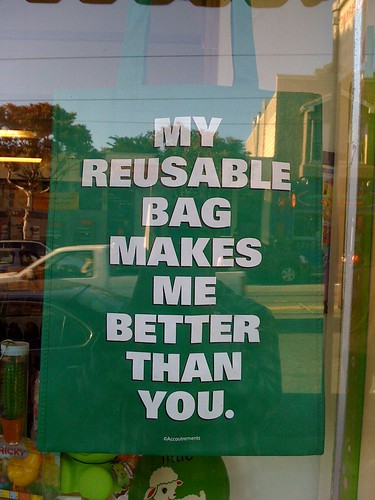
This is my opinion on environmentalism. I'd actually never heard of it before I read about the eponymous website  (found here), but once I'd heard about it, I was appalled.

The website itself is a fun read. It's lighthearted and informative, especially if you want to find out how even Sith Lords are planning to go green. But the root of the author's point is clear.

Image copyright Tyrus Smalley
I think that eco snobbery is the worst thing that environmentalists can do to create sustainable ecological change. It leads to a false dichotomy - either you're saving the planet by biking to your yurt in your vegan sneakers while wearing only certified organic cotton tie-dye clothes or you're throwing aluminum cans out the window of your your Hummer while driving two blocks to McDonalds in order to pick up your Big Mac. Given the choice to work, strive, and spend a lot of money to still be told they're falling short, or to throw up their hands in disgust and not care about anything any more, I'm sure most people choose the latter. Either way they're the villains in an eco-snob's view, so why should they bother?

I'm sure you can see why this is environmentalist kryptonite. Eco snobbery undermines our entire platform by making the very people we seek to reach (or become) not willing to listen to a word we say. Instead of being an eco snob and pointing out all the flaws in someone's environmentalist efforts (or your own, for that matter), celebrate every step of the process. Shortened your showers? Drove less? Ate vegetarian for a week? Congratulations! Whoop it up and give yourself a gold star on the calendar. Messed up? Take a page from Scarlett O'Hara - tomorrow is another day. Hear that someone tried something new to go green? Congratulate them, no matter how small the step seems to you. If they're talking about it, they're obviously proud of their efforts, so don't spoil it for them.

How do you keep yourself on the eco track? Do you have a "go green" buddy, who you can swap tips and share accomplishments? Do you write a blog, like me? Suggestions always welcome in the comments. 

Tuesday, January 11, 2011

What is "Red List" Seafood?

Facebook has caught on to my environmentalist leanings. I've been getting ads about Costco serving "Red List" seafood and some groups are boycotting it because of this.

My first thought: What the heck is "Red List" seafood? A little Googling and some links from my time in Conservation Biology found me the answer.

The Monterey Bay Aquarium has done research to scientifically rank seafood products based on how friendly they are to our oceanic environments. Like a traffic light, they are ranked green, yellow, and red.

Green seafood, or the "Best Choice" seafood, are abundant, well-managed, and farmed or caught in ways that are good for the environment or that do not harm it.

Yellow seafood, or "Good Alternatives", have some concerns about how they're procured, either through fishing or farming, or have habitats which are slightly threatened due to human activities. They're an option, but it's recommended that consumers avoid them.

Red seafood, or "Avoid" list, are currently overfished or farmed/caught in ways that harm the environment and other marine life.


They offer a list, which can be found on the above site, for each region of the US, which they suggest you print and keep with you when you go out for seafood. Download a Regional Seafood Watch Card | Monterey Bay Aquarium. There's also one for sushi if you love that as much as I do.

Keep this in mind when shopping. Ghost fishing and unsustainable fishing can be as wasteful as industry, and farmed salmon takes three times the food to raise as wild. Ghost fishing (accidental catching and killing done by lost nets, line, and hooks) kills nearly 1/3 as much as legal fishing. Animals often caught include dolphins and sea-turtles. We can make small differences by choosing wisely at the counter. 

Tuesday, September 14, 2010

How not to be a "trendy" conservationist.

My conservation class had a detailed discussion about this subject. Is it a good thing that being ecofriendly has become so popular? We came up with two different perspectives.

One is the good - people are thinking (however slightly) about their environmental impact. They use metal water bottles, eat from farmer's markets or buy organic, buy a Prius instead of a Hummer, and recycle. Basically, it's a start to true environmentalism and sustainable living.

The down side is that environmentalism becomes trendy, and suddenly it's a cliche selling point. "GREEN!" screams each and every semi-recycled, maybe-not-as-good-as-it-claims product. Yahoo! has a list of "Signs of a green hypocrite" that is worth a read. It's not ground breaking, but it's a start to make people think. Mainly it lists things like "people who use reusable bags but still eat meat at every meal", or "takes an eco-vacation but flies there, and first-class to boot".

Sustainable living shouldn't be a fad. It should be a way of life. Fads come and go, but true lifestyle changes stay with us. The hardest part for most people is making sure that the changes are feasible for their life, not the Grapefruit Diet of environmentalism. Sure, you lose C02 weight while you're on the bandwagon, but as soon as you fall off, you gain it all back again. But watching your C02 calories, decreasing your intake of single-use products, and cutting back on your oil, you've got a lifestyle plan that you're able to retain for years.

Make the changes fit your life, not vice versa. If you love bottled water, then get a reusable bottle and a charcoal filter. If you love new clothes, go to a thrift store and donate things when you no longer want them. If you love meat (like me!) then don't give it up entirely, but become a Sunday carnivore.  Life is about balance. Give being green a high priority, but make sure you can handle the change without resentment.

Most importantly, if you're going to talk the talk, whatever your particular environmental issue is, be sure you're walking the walk first. I surprised a friend when we headed to a mall and I made a purchase. I asked for no bag and whipped out my trusty furoshiki.
"You're sure serious about this whole environmentalism thing, aren't you?" She asked.
"Of course I am," I replied. "How can I recommend things on my blog if I don't do them myself?" As Gandhi said, be the change you wish to see in the world (otherwise, who will follow?).

Sometimes we slip. It's inevitable. I forgot my furoshiki when I changed purses and had to get two grocery bags just the other day. To use a cliche, sustainable living and environmental living are marathons, not sprints. You can bet exactly what went into my purse when I went home. That's green living, long term, not short-term.

Tuesday, September 7, 2010

Compost and Why I'm Fanatic About It

I just finished "In Defense of Food" by Michael Pollan. It's a really fantastic book, if you haven't read it or any of his other books, and I highly recommend that you give it a quick read through.

One subject he covers extensively is the decline of nutrition in our food. He states that American diets lead to a paradox: obesity and nutrient deficiency in the same people.

"USDA figures show a decline in the nutrient content of the forty-three crops it has tracked since the 1950...to put this in more concrete terms, you now have to eat three apples to get the same amount of iron as you would have gotten from a single 1940's apple, and you'd have to eat several more slices of bread to get your recommended daily allowance of zinc than you would have a century ago".

While Pollan blames this decline on many things, especially breeding for quantity over quality, he also points out that industrial fertilizers are to blame for many of the ills.

Industrial fertilizers add three nutrients, nitrogen, phosphorus, and potassium (N-P-K) into the soil. But that's all they add into the soil, and that can be a problem. As noted above, you get many of your minerals and other important compounds from food. If these minerals aren't replaced into soil, then the soil will have none to give to more plants, and the nutritional content of the produce will decline, for this and other reasons.

Now, compost is the decomposing remnants of both food and green waste. It contains the mineral and elemental contents of what was placed into it. That means that it is better for renewing the whole elemental content of the soil, including things which we may not currently know are beneficial for the soil. This is why when I plant my garden, I always enrich the soil with compost, not fertilizer.

When I looked over the Global Buckets design to make my own, I was concerned that they're advocating only enriching their soil with fertilizer. First, the potting mix they use is nutrient-poor, and since we're coming to realize that there's a problem with our industrial form of agriculture, it's best that we don't export the problem to developing countries. Second, if compost can be used as fertilizer, the buckets would be self-sustaining instead of requiring the purchase of fertilizer, saving those using it money.

The inventors of Global Buckets say that compost inhibits their wicking process and therefore isn't practical. But I'm testing this with Fred the Tomato this summer. He might not end up as spectacular as their plants are (since fertilizers cause faster and larger growth at the expense of quality), but if I can make Fred bear fruit, I'll be happy.

Tuesday, August 10, 2010

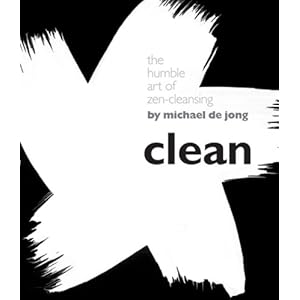
Clean: The Humble Art of Zen-Cleansing

Book review time! I know very few of you read my quick articles on cleaning with fewer chemicals, but it's really worth it to realize how many chemicals we pour into our environment just in cleaning up our house, dorm, or apartment. There are dozens of books out on the market which claim to tell you how to clean using fewer chemicals, and I've read several of them. Thus far, Michael de Jong's Clean has stood out as a fairly no-nonsense guide.

A lot of the books out on cleaning greener are panicky. I read one that, in less than fifty pages, made me want to desperately take the author out for yoga and a chill pill. They panic at the amount of chemicals in our home environments, how disease is on the rise, and turn cartwheels about how we're killing ourselves while not really giving much good advice except "buy a greener cleaning solution". De Jong's book is much more calm and, not surprisingly, zen. His book is divided into five sections: salt, baking soda, vinegar, borax, and lemon. Each, alone or combined with another, is a cleaning ingredient. He lists tips under each section, and includes a reference in the front for easy browsing. I've read a lot of similar tips in other books, but he had some I've never heard of, and many which I know work. The book is also fairly small and inexpensive, if you can't find it at your local library for a quick peruse.

You can also find him online with tips here.

Green clean - it's cheaper, better for your home and macro-environment, safer for your skin, and more kind for the planet. Give it a shot!

Thursday, August 5, 2010

Another Oil Spill

There was an oil spill on the Santa Barbara coast, though you've probably not heard of it. Luckily, it's not an urgent situation: it happened in 1969. To us, with the Gulf Oil Spill as a lens, it was really small - only 100,000 barrels as compared to the 94-184 million already spilled this year. But this oil spill was monumental. 

This oil spill was one which shocked the nation. People saw the pictures of oil-soaked birds and sludged beaches, and they began to think. This oil spill was what had politicians and people calling for change. 

One year after the spill, the first Earth Day was celebrated. President Nixon founded the Environmental Protection Agency and signed in the Clean Air Act and the National Environmental Policy Act. This one, tiny oil spill was what tipped social change and triggered all these events. 

That oil spill changed the way we view the environment in this country. Certain people and groups are trying to use the current spill in the same way. Let this disaster serve a purpose through changing society and consuming less oil. More Americans polled are ranking the environment as extremely important to them every month. Use less. Save more. Support petitions which you believe will help the current situation. And sing loud - oil isn't the answer of the future. 

Social change is slow. The first Earth Day took a year to be established after the Santa Barbara. The Gulf Spill is longer and more drawn out than the Santa Barbara one, so it has less impact on our societal consciousness, especially in competition with various wars and the financial crisis. Still, don't forget yourself, and don't let others forget what a disaster this is. 

Thursday, July 22, 2010

The Dangers of Going Too Green

I was reading a book today on greening your lifestyle and especially on eliminating toxic chemicals from your life. One part involved paint. Some of the author's advice was sound: watch out for formaldehyde and paints which "out gas" toxic chemicals over time. However, one of her alternatives was earth-based pigments, especially clay-based ones with the mineral cinnabar for a lovely red color.

Those of you with any chemical or historical background should be cringing right now. For those not in the know, cinnabar, also known as mercury(II) sulfide, is ranked by Sax's "Dangerous Properties of Industrial Materials" as poison and with the highest hazard rating they give. We know how toxic mercury can be from fish, but one can also absorb it through the respiratory tract and through unbroken skin, and in industrial concentrations mercury can cause depression, allergies, tremors, insomnia, and loss of memory, and diseases of the mouth and gums. So your "natural" paint, as it flakes throughout time, will be most likely putting mercury into your dust, which is then inhaled by you and yours. Not exactly the non-toxic green alternative.
This leads me to the law I see in a lot of hard-core "go green and environmental" advice groups:
All industrial things are bad. All natural things are good.
(At this point, my sarcastic mother points out, "Syphilis is natural".)
Yes, many chemicals, elements, and compounds can be toxic, but many inventions of modern society (e.g. vaccines) are extremely good for us. Synthetic processes are what allow us to design and create 100% recyclable products.

Tuesday, July 6, 2010

Why You Should Care About Global Warming

A 2009 poll said that nearly 30% of all Americans don't believe global warming and climate change are happening or that it affects are overstated. This is a catastrophe. But this isn't the point of the blog. Let's assume, for writing sake, that you do trust that global change is happening. That you watched "The Inconvenient Truth", or that you've read "Dire Predictions" by Mann and Krump about the findings of the International Panel on Climate Change. Let's even assume you're skeptical about the how drastic the changes will be. 

Let me try to convince you that you should care. 

Assume the predictions are true. Assume that the polar ice caps and the Greenland ice sheet will eventually melt because of temperature rises of 2-3 degrees (three times that in the poles), that snowlines will rise at least 600 feet and that sea levels will rise about 12 feet or up to 21 feet.  Let's assume that severe storms like Katrina will increase nearly 50%, that there will be more fires (if you live in California, that should give you pause), and that oceans will sour and acid rain will increase. Let's assume that the growing season will shift and that our growing lands will become more susceptible to pests like the boll weevil and our cities to mosquitoes with malaria and West Nile. Let's assume that the frozen methane under the sea and the Siberian permafrost melts as temperature rises, since it's 23 times more destructive than carbon dioxide. 

Why should you care?


Saturday, May 8, 2010

On anthropology and ecology

I interviewed a few friends for an anthropology paper I wrote last quarter, and a couple of them have asked to read the final draft. The first who read it was quite impressed, but ended the conversation with "But, I always think that you're a scientist!"
Annoyed, I replied with my usual riposte: "I am a scientist. I'm a social scientist."
He countered his statement: "Oh, I meant a real scientist."

This frustrates me. The social sciences have gotten a rep as being full of "and how does that make you feel?" conclusions, and anthropology is especially prone to this. No one stands up for our discipline, either.

I think this needs to change. I think anthropology got kind of scared, honestly. The social sciences were used to justify a lot of really awful things in the past, like social Darwinism (hint: Darwin never said "Survival of the fittest".) and the Nazi genocide of pretty much everyone who wasn't Aryan. We got scared and shut up because we realized how powerful our words are, so we're scared to say anything that could cause more trouble, pain, or even death.

I understand this, and I agree with this. But times are changing. We live in a global village, but the problem is, we don't speak the same language, literally or culturally. I think that, as we come into contact more and more with other people who aren't Westernized, the social sciences, the study of these people and of us, is going to be more and more useful as a translator. If we don't understand other cultures, how can we urge them to conserve wildlife? Imposing our worldview on them doesn't create any change, it just creates resentment.

I'll be posting in more detail from my conservation bio class about a park called Amboseli in Kenya which has successfully used anthropology to create change. But this rant is about my discipline, and how the social sciences get pretty well dissed. I know we're a young science. Physics has been around for hundreds of years. Actual scientific study of humanity, society, and culture has only begun to form in the last hundred, and true scientific method in the last fifty.

 I can't get discouraged, though. My work needs to be meaningful, and I think the best thing we, as social scientists, can do is to remember to be careful. Learn from our history and mistakes, and act as guides when we can. Science alone is heartless and only interested in how things function. It's the social sciences which situate it in context, put the human back into the machine.